


Best Cotton Crew Socks for Gym Workouts Compared
Last Updated: November 8, 2026
Quick Summary
The best cotton crew socks for gym workouts are cotton-rich blends with a ribbed cuff and reinforced heel and toe, since they balance comfort and durability. Pure cotton suits lifting and low-sweat sessions, while higher synthetic blends handle running and heavy sweating better.
- Cotton absorbs moisture rather than wicking it, so pure cotton can feel damp after hard sessions.
- Choose a cotton-rich blend with a ribbed cuff and reinforced heel and toe for most lifting.
- Pick a blend with more synthetic content for running and high-intensity cardio.
- Crew height around mid-calf protects the lower leg and keeps the sock in place during movement.
- Check the listed fiber content rather than relying on the sock's name alone.
Table of Contents
- What Cotton and Cotton Blends Do Well and Where They Fall Short
- Choosing the Right Crew Height, Cushioning and Fit
- Athletic Crew Socks by Workout Type: Lifting, Running and Cross-Training
- Pairing Crew Socks With Training Shoes and Sneakers
- Workout Socks With Grip and Friction Control
- Choosing Your Next Pair From the ShopNsocks Range
- Frequently Asked Questions
Looking for the best cotton crew socks for gym workouts? Cotton remains one of the most familiar and comfortable choices for training, and ShopNsocks has put together this comparison to help you pick the right pair. Many gym-goers reach for technical synthetics by default, but cotton blends still earn a place in the bag for lifting sessions, cross-training days and casual circuit work. The right choice depends on how you train, what shoes you wear and how much sweat your sessions produce.
Cotton feels soft against the skin from the first wear. Crew height also protects the lower leg and keeps the sock in place when you move quickly between exercises. For many people, a well-made cotton crew sock is the simplest way to get comfort, coverage and a clean look in one pair.
The trade-offs matter, though. Cotton absorbs moisture rather than wicking it away, so heavy sweaters may notice a damp feel by the end of a hard session. That is why this guide looks closely at cotton blends, cushioning, fit and grip before recommending a pair. Our pick for most lifters is a cotton-rich crew sock with a ribbed cuff and a reinforced heel and toe, which balances comfort and durability without sacrificing too much moisture control.
What Cotton and Cotton Blends Do Well and Where They Fall Short
Cotton's reputation in athletic wear is mixed, and for good reason. Understanding why cotton behaves the way it does helps you decide when a cotton crew sock is the right tool for your gym bag and when it will let you down.
The case for cotton in the gym
Cotton fibers are soft and breathable, which is why they feel comfortable against the skin from the first wear. Unlike some synthetic knits that can feel clammy or slippery, cotton has a dry, natural hand feel that many lifters prefer for lifting sessions, machine work and casual circuit training where sweat output is moderate. Cotton also holds its shape reasonably well in a ribbed knit, so a well-made crew sock stays up on the calf through squats, lunges and sled pushes without constant readjustment.
For low-to-moderate intensity training, a cotton-rich crew sock can be a comfortable choice.
Where cotton falls short, and why
The core limitation is moisture management. Cotton fibers absorb water rather than wicking it away, and once wet they dry slowly. In practice, that means a pure cotton sock can feel damp and heavy by the end of a hard session, and wet cotton loses some of its insulating ability, so feet can feel cold after training. For heavy sweaters, long runs or high-intensity interval sessions, that damp feel is a real drawback, not a minor inconvenience.
This is where blends matter. Adding nylon, polyamide or elastane improves stretch, shape recovery and drying speed while keeping much of cotton's comfort. A cotton-rich blend can offer comfort and breathability with some synthetic content. Pure cotton socks are best reserved for lifting and low-sweat sessions; synthetic-heavy blends make more sense for running and high-output training.
A note on construction
Fabric content is only part of the story. Look for reinforced heel and toe zones, a ribbed cuff that holds without pinching, and a cushioned sole if you want impact protection. A 100% cotton sock with poor construction will underperform a well-made cotton blend every time.
Check the listed fiber content of any sock rather than relying on the name alone.
Choosing the Right Crew Height, Cushioning and Fit
Crew height usually sits around mid-calf, which protects the lower leg from shoe rub and keeps the sock from slipping during lunges, squats and jumps. Taller socks can look sporty with training shoes and sneakers, while shorter crews suit trainers with lower cuffs.
Cushioning changes how a sock feels underfoot. Light cushioning suits most lifting and cross-training, while heavier terry cushioning in the sole adds impact protection for high-intensity classes and running. A ribbed cuff holds the sock in place without cutting into the calf.
For fit, aim for a snug heel and a comfortable toe box with no pinching. A sock that bunches or slides will cause friction and blisters, so choose the size your shoe size chart recommends and check the stretch in the cuff.
Watch out: buying a sock that is too tight in the calf can restrict circulation during long sessions, so always check how it feels after a few minutes of movement.
Athletic Crew Socks by Workout Type: Lifting, Running and Cross-Training
Cotton crew socks perform differently depending on how you train. Matching cushioning, height and fabric blend to your workout type is the most reliable way to get comfort and performance from a cotton sock. Here is how to think about it for the three most common gym training styles.
Lifting and strength training
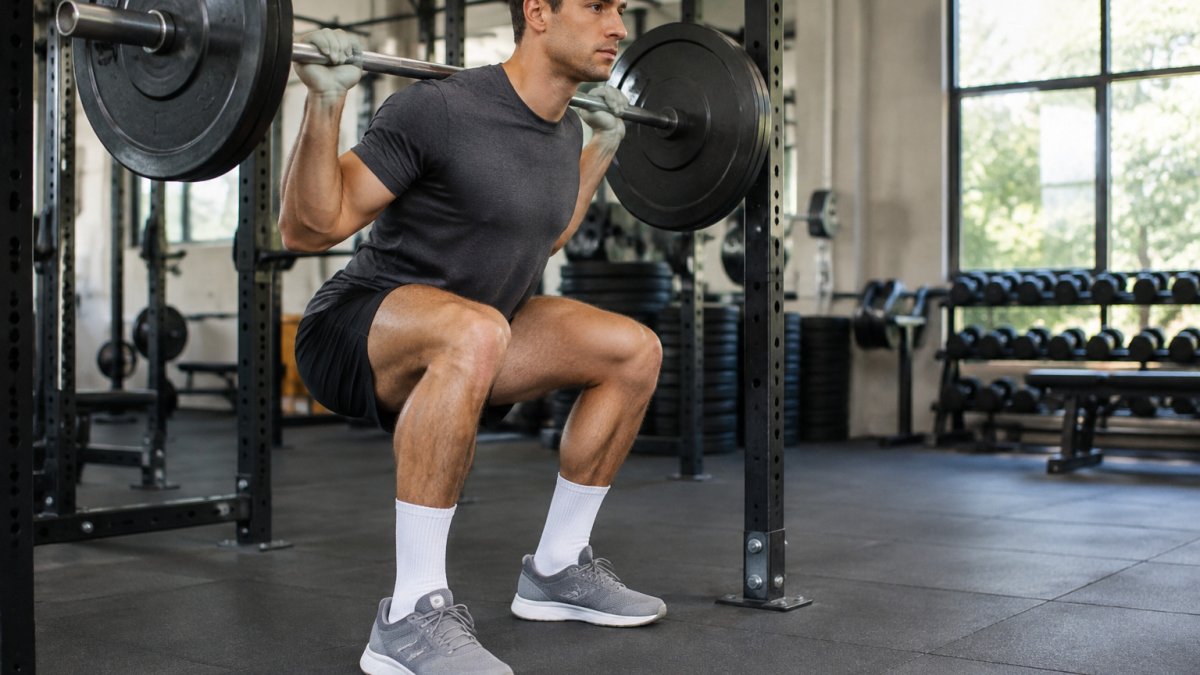
Lifting calls for stable, supportive socks that stay put under heavy loads and do not bunch inside the shoe. A cotton-rich crew with a firm ribbed cuff and reinforced heel and toe works well here: the cotton provides comfort and a natural feel, while the reinforcement adds durability where socks wear out fastest. Light cushioning in the sole is usually enough for lifting, since the priority is foot stability rather than impact absorption. The Paul Smith Men's Cotton Crew Socks - Blue Multi-Color Ribbed combine soft cotton with added stretch.

Best for: lifters who want soft, shape-holding cotton with a clean look. Skip if: you sweat heavily during long sessions and need faster-drying fabric.
Running and high-intensity cardio
Running and HIIT demand more moisture control and cushioning than lifting. Cotton's moisture retention becomes a liability here, so choose a cotton blend with a higher synthetic percentage and a cushioned sole. A blend with nylon or polyamide dries faster and holds its shape through repeated high-impact sessions. The Sockery - 6-Pack Solid Jacquard Loom, Brescanni offers multiple colorways.

Best for: short cardio sessions and mixed training where you want some cotton comfort without pure cotton's drawbacks. Skip if: you run long distances regularly, a synthetic or merino blend will manage moisture better.
Cross-training and circuit work
Cross-training mixes lifting, cardio and bodyweight movements, so it rewards a middle-ground sock: a cotton-rich blend with moderate cushioning, a snug heel and a ribbed cuff that stays in place through jumps, lunges and sled pushes. This is where cotton blends earn their place, offering comfort for the strength portions and enough durability for the higher-impact segments.
Best for: mixed sessions where no single demand dominates. Skip if: your circuit work is heavily cardio-based and you sweat a lot, lean toward a more synthetic blend.
A quick decision rule
If your training is mostly lifting and low-sweat work, a cotton-rich crew is a strong choice. If it is mostly running or high-intensity intervals, choose a blend with more synthetic content. If it is a mix, a cotton-rich blend with moderate cushioning is the safest all-rounder.
Each workout style favours a different sock, so here is how the three main gym training types compare.
| Workout type | Best for | Key difference |
|---|---|---|
| Lifting and strength training | Soft, shape-holding cotton with a clean look | Light cushioning; cotton-rich crew with reinforced heel and toe |
| Running and high-intensity cardio | Short cardio and mixed training | Higher synthetic content; cushioned sole; dries faster |
| Cross-training and circuit work | Mixed sessions with no single demand | Moderate cushioning; cotton-rich blend with ribbed cuff |
Pairing Crew Socks With Training Shoes and Sneakers
Crew socks look best when the cuff sits just above the shoe collar. With low-profile trainers, a shorter crew keeps the look clean. With high-top training shoes, a taller crew fills the gap and prevents skin irritation.
Match sock weight to shoe volume. A thick terry sock inside a tight minimalist shoe can cause pressure points, while a thin sock inside a roomy trainer may slip. Test your pairing with a short warm-up before a full session.
Workout Socks With Grip and Friction Control
Friction causes most gym blisters, and grip matters when you need stability on the platform or in a lunge. Look for socks with reinforced heel and toe areas, which absorb rubbing and extend wear. Some cotton blends add a light textured knit that improves grip inside the shoe.
Choosing Your Next Pair From the ShopNsocks Range
Start by deciding which workout you do most, then pick the fabric and cushioning to match. For lifting and everyday gym use, a cotton-rich crew with a ribbed cuff may suit you. For a mix of styles and colors, the ShopNsocks range offers several options.
Browse the full selection on the ShopNsocks homepage to compare crew heights, colorways and pack sizes. Once you know your training style, you can pick the pair that fits both your routine and your wardrobe.
Ready to upgrade your gym socks? Explore the ShopNsocks collection and find a cotton crew built for how you train.
Frequently Asked Questions
What are the best socks for gym workouts?
For most gym sessions, a cotton-rich crew sock can be a comfortable choice. Look for a ribbed cuff and a length that sits above the shoe collar. The ShopNsocks Paul Smith cotton crew socks and the Sockery 6 Pack Paul Smith Solid are among the options available.
Are crew socks good for the gym?
Yes. Crew socks cover the ankle and lower calf. Paul Smith men's cotton crew socks in blue multi-color ribbed or light green ribbed are available in crew length.
Are cotton socks suitable for sweaty workouts?
Cotton socks absorb sweat well, which keeps the skin comfortable during moderate sessions, but they hold moisture against the foot once saturated. For long or very sweaty workouts, a cotton-rich blend dries faster than pure cotton and reduces the risk of blisters caused by damp fabric rubbing. If you train at high intensity, rotate pairs between sessions so each one can dry fully before its next use.
Should gym socks have cushioning or compression?
Cushioning suits lifting, cross-training and any activity with repeated impact on hard floors, because it softens each step and adds comfort around the heel and ball of the foot. Light compression can support circulation during long sets or runs, but it is not essential for most gym workouts. Choose cushioning if you spend most of your time on your feet or impact-heavy movements, and a lighter sock if your sessions are mostly strength work.
