


Best Cotton Dress Socks for Men: 2026 Buyer's Guide
Quick Summary
The best cotton dress socks for men are mercerized or combed cotton blends with at least 70-80% cotton, a dense knit, reinforced heel and toe, and a mid-calf or over-the-calf height that stays put. Pure cotton feels softest and breathes best, but it stretches out faster, so rotating a few pairs helps.
- Look for combed or mercerized cotton, since mercerizing adds smoothness, sheen and better dye uptake.
- Aim for at least 70-80% cotton, with nylon and elastane for shape retention.
- A denser knit holds its shape better and resists thinning at the heel and toe.
- Choose mid-calf or over-the-calf height so socks stay put when you cross your legs.
- Rotate two or three pairs so each one dries fully between wears.
Table of Contents
- What Makes a Cotton Dress Sock Worth Buying
- 100% Cotton Socks for Men: What to Look For
- Best Cotton Dress Socks for Men Compared
- Best Dress Socks for Sweaty Feet
- Cotton Versus Cotton Blends in Real Conditions
- Care, Shrinkage and Keeping Your Socks Longer
- Choose Your Cotton Dress Socks and Order Your Pairs
- Frequently Asked Questions
What Makes a Cotton Dress Sock Worth Buying
Most dress-sock roundups tell you to look for "quality cotton" and leave it there. That is a slogan, not a buying criterion. A cotton dress sock is worth buying when four measurable things line up: cotton type, fiber percentage, knit density, and reinforcement zones. Compare any two pairs on those four points and the price difference usually explains itself.
Cotton type: combed, mercerized, and what the label actually means
Combed cotton has had short fibers and impurities removed before spinning, which produces a smoother, stronger yarn with less pilling. Mercerized cotton goes a step further: the yarn is treated under tension with a caustic solution, which swells the fiber, adds a subtle sheen, and improves dye uptake. A mercerized pair like the Bugatchi Mercerized Cotton Dress Socks in Blue Camo Pattern is one example of that finish.
Brands often list "100% cotton" while the fine print shows a small elastane or nylon content. Neither is dishonest, but they behave differently. Look for at least 70-80% cotton in a dress sock if cotton comfort is the point, with the remainder split between nylon for shape retention and elastane for stretch. A 95% cotton / 5% elastane sock feels softest but recovers slowest; a 75% cotton / 20% nylon / 5% elastane blend holds shape through a long day but feels slightly less breathable.
Knit density and gauge
Knit density is how tightly the yarn loops are packed, and it is the biggest predictor of whether a cotton sock sags by lunchtime. A denser, higher-gauge knit holds shape better, resists see-through thinness at the heel, and looks smoother under a polished dress shoe. A looser knit breathes more and suits warm offices, but thins faster at pressure points. If gauge is not stated, use fabric weight and the brand's description ("lightweight," "mid-weight," "cushioned") as a proxy.
Reinforcement zones: heel, toe, and cuff
Reinforcement is where budget socks and better socks separate. Look for a reinforced heel and toe, often a denser knit or nylon-blended patch at those high-friction zones, because that is where cotton socks fail first. At the cuff, a moderate tension band holds the sock up without cutting into the calf. The Bresciani 1970 Men's Cotton Mid-Calf Socks pair a mid-calf height with added stretch for comfort and durability.
Height and fit, checked against your shoe size
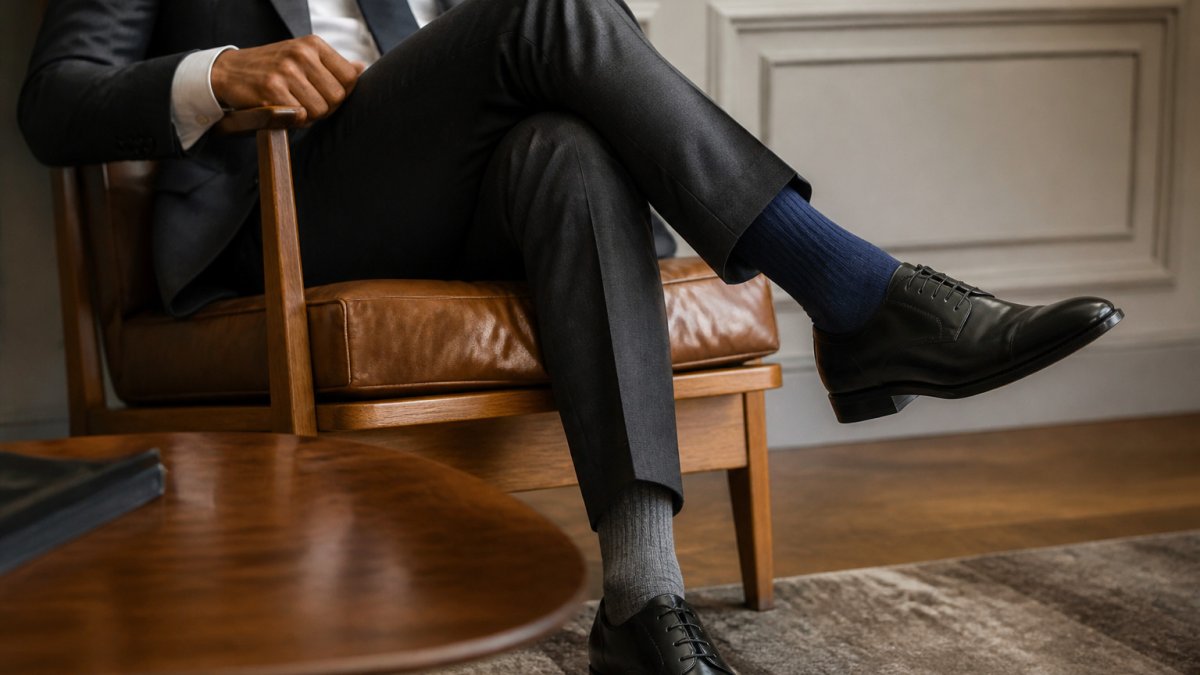
Sock height matters more with dress shoes than most men expect. A sock that ends below the calf exposes bare skin when you cross your legs, which looks careless with a suit; mid-calf and over-the-calf lengths stay put. Size to your foot, not the largest option on the page, and if you are between sizes, size down for a dress sock since cotton relaxes with wear.
Watch out: a sock marketed as "premium cotton" but sold without a fiber breakdown, gauge note, or reinforced heel/toe is usually a basic knit with a premium label. Ask for the spec sheet or skip it.
A quick buying checklist
Before you add a pair to the cart, confirm: (1) cotton type, combed or mercerized for a smoother finish; (2) fiber percentage, 70-80%+ cotton, with nylon and elastane for shape; (3) knit density, fine gauge for dress shoes, lighter knit for warm weather; (4) reinforced heel and toe plus a flat toe seam; (5) cuff tension that holds without marking; and (6) a height that stays put when you cross your legs. A sock that passes all six is worth the price; one that passes two is a compromise you will feel by mid-afternoon.
100% Cotton Socks for Men: What to Look For
A 100% cotton sock is breathable and soft, and suits most office and formal settings. The trade-off is less natural recovery than a blend, so it can stretch out after repeated wear. Choosing a well-knit pure cotton sock and rotating pairs helps extend its life.
Pattern is also part of the decision. Solid colors are a conservative choice for dress codes, while camo and stripe patterns add personality. The Paul Smith Men's Cotton Dress Socks in Black Stripe Pattern are an example of a stripe pattern.
Watch out: pure cotton can lose shape with repeated wear, so rotating pairs helps keep them looking sharp.
Best Cotton Dress Socks for Men Compared
The table below compares the cotton-focused options in this guide by material, height and typical use. Prices are the listed prices on ShopNsocks.
| Sock | Material | Height | Starting Price | Best For |
|---|---|---|---|---|
| Bugatchi Soft Cotton Camo 4-Pack | Soft cotton | Crew | $45.00 | Trying several patterns at once |
| Bugatchi Mercerized Cotton Blue Camo | Mercerized cotton | Crew | $25.00 | A smoother, sheen finish |
| Bugatchi Mercerized Cotton 3-Pack | Mercerized cotton | Crew | $65.00 | Building a versatile rotation |
| Bresciani 1970 Business Stripe | Italian cotton with stretch | Mid-calf | $114.00 | Formal, suit-heavy wardrobes |
| Paul Smith Black Stripe | Cotton | Crew | $30.00 | Conservative dress codes |
| Paul Smith Turquoise Ribbed | Cotton | Crew | $30.00 | Adding color to smart-casual looks |
The Bresciani pair costs the most and earns it when your wardrobe leans formal and you wear dress shoes daily. For most men building a first rotation, the Bugatchi Mercerized 3-Pack offers the most range per dollar.
Here is how we would choose:
Best for: men who want a versatile cotton rotation for daily office wear. Skip if: you wear sneakers most days and only need a basic sock.
Best Dress Socks for Sweaty Feet
Sweaty feet are the main reason a cotton sock can feel clammy. Cotton absorbs moisture, which helps wicking but leaves the fabric damp during a long day. A blend with a synthetic component often moves moisture away from the skin more effectively than pure cotton.
If your feet sweat heavily, pairing a blended sock with a breathable dress shoe makes a bigger difference than any single sock choice.
Bugatchi Men's Soft Cotton Dress Socks - Camo Collection 4-Pack / Sockery →
Watch out: rotating two or three pairs gives each sock time to dry fully between wears, which reduces odour and extends the life of the fabric.
Cotton Versus Cotton Blends in Real Conditions
Most guides compare cotton and blends on a spec sheet. The useful comparison is what happens on your feet between 7 a.m. and 7 p.m., through a commute, a heated office, a lunch walk, and the trip home.
Heat and sweat: absorption versus transport
In mild, dry conditions that is comfortable; in heat or during a sweaty commute, a pure cotton sock becomes damp and stays damp, the clammy feeling men call "sweaty feet." A blend with nylon, polyester, or a small elastane content moves moisture toward the fabric surface where it evaporates faster. Cotton wins on softness and breathability in mild conditions; a blend wins on drying speed when you are actually sweating.
Odor: why blends are not automatically better
Cotton is breathable and, because it absorbs moisture, can keep odor-producing bacteria off the skin surface, until the fabric stays damp, at which point odor builds. Synthetic fibers are often blamed for odor, but in a dress-sock blend the synthetic share is usually small (nylon for durability, elastane for stretch), and the cotton majority still does most of the work. A damp sock of any fiber will smell by day's end, so rotation and full drying between wears matter more than the fiber label.
All-day shape: recovery and sag
Pure cotton has less natural recovery than a blend, so it stretches out after repeated wear, most noticeably at the ankle and cuff. A blend with nylon and elastane springs back and holds position through a long day. If you wear dress shoes daily and hate pulling your socks up, a blend is more practical. If you prefer pure cotton, a well-knit pair with a reinforced cuff can still hold up, provided you rotate it.
Use-case recommendations
-
Office wear, air-conditioned building: pure or high-cotton (90%+) socks feel softest and breathe well; a mercerized cotton crew is a good default.
-
Formal events and suit-heavy days: a mid-calf or over-the-calf cotton sock with a reinforced cuff stays put when you cross your legs; the Bresciani 1970 Business Stripe is built for this use case.
-
Sensitive skin: high-cotton content with a flat toe seam and no harsh dye finish is the safer pick; blends with a small synthetic share are usually fine, but check the fiber list.
-
Extended standing or long days: a denser knit with reinforced heel and toe resists thinning at pressure points; a blend holds shape better than pure cotton over 12+ hours.
A note on bamboo and merino
Bamboo and merino are the two fibers most often offered as alternatives to cotton. Neither replaces cotton for the core use case, a breathable, soft, dress-appropriate sock, but both are worth knowing if your priority shifts to temperature regulation or odor resistance.
Watch out: a "cotton blend" with a low cotton percentage (under 50%) is effectively a synthetic sock with cotton marketing. Check the fiber list before you assume you are buying cotton comfort.
Care, Shrinkage and Keeping Your Socks Longer
Rotation matters as much as washing. Wearing the same pair every day breaks down the elastic and thins the knit faster. Keeping three or four pairs in rotation lets each one recover between wears.
Choose Your Cotton Dress Socks and Order Your Pairs
Start with the context you dress for most. Formal, suit-heavy days call for a mid-calf cotton sock such as the Bresciani Business Stripe. Everyday office wear suits a crew-length mercerized cotton like the Bugatchi Mercerized Cotton 3-Pack. Gift shoppers and anyone unsure of their style can start with the Bugatchi Soft Cotton Camo 4-Pack.
Browse the full cotton dress sock range at ShopNsocks and order the pairs that fit your wardrobe.
Frequently Asked Questions
What brand makes 100% cotton socks?
Several brands make 100% cotton dress socks, but the choice depends on the look and fit you want. At ShopNsocks, the cotton options include the Bugatchi Soft Cotton and Mercerized Cotton dress socks, which come in camo, multi-dot and solid patterns, plus Paul Smith cotton dress socks in stripes and solid ribbed styles. Check each product listing for its exact fiber content before ordering.
What are some good quality cotton socks for men?
Good cotton dress socks have an even knit and enough stretch to stay up comfortably. Mercerized cotton is a useful marker because the process adds softness and a subtle sheen. The Bresciani 1970 mid-calf cotton socks and the Paul Smith cotton crew socks are cotton options from ShopNsocks.
Are cotton dress socks good for sweaty feet?
Cotton absorbs moisture and breathes better than synthetic fibers, which helps with mild sweating. It does hold water, though, so it can feel damp during long days. Choose a lighter knit, rotate pairs daily so each one dries fully, and consider a cotton blend if your feet sweat heavily. Breathable cotton remains a sensible starting point for most men with sweaty feet.
How should men's dress socks fit with dress shoes?
Dress socks should be long enough to stay up over the calf when you sit cross-legged, which is why mid-calf and over-the-calf heights are recommended with suits. The sock should stretch snugly without leaving marks on the leg. Match the sock to your shoe size, and avoid socks so loose that they bunch under the foot.
