


7 Best Socks for Hiking and Everyday Wear That Do Both
Last Updated: November 20, 2026
Quick Summary
The best socks for hiking and everyday wear share four traits: moisture control, targeted cushioning, a fit that stays put, and reinforced heel and toe zones. A mid-weight wool or wool-blend crew sock with light cushioning covers both jobs better than two specialist pairs.
- Merino wool resists odour and can be worn two or three days of light hiking between washes.
- A soaked merino sock takes 12 to 24 hours to dry, versus two to four hours for thin synthetic.
- Crew height rises to mid-calf and is the most versatile option for boots and trousers.
- Test a new sock on a two-hour walk in your usual shoes before trusting it on a hike.
- If you're between sizes, size up: a slightly loose sock shifts less than a tight one.
Table of Contents
- What Separates the Best Socks for Hiking and Everyday Wear
- Merino Wool, Cotton and Synthetic Blends: What Each Material Does
- Cushioning, Height and Fit: Matching the Sock to the Shoe
- Hiking Socks vs Everyday Socks: Where the Two Actually Diverge
- The Best Socks for Everyday Wear That Handle a Trail Day
- The Best Hiking Socks for Hot Weather: What to Look For
- How to Test Socks Before You Commit to a Drawer Full
- Pick Your Pair From the ShopNsocks Collection
- Frequently Asked Questions
What Separates the Best Socks for Hiking and Everyday Wear
The best socks for hiking and everyday wear are the ones you forget you're wearing on the trail and reach for again on a Tuesday morning at the office. At ShopNsocks, we've spent years curating socks across every fabric and height, and the pairs that earn repeat wear share four traits: moisture control, cushioning where you need it, a fit that stays put, and a fabric blend that survives the wash cycle.
Below, we break down exactly what to look for, how merino wool compares to cotton and synthetics, and how to match sock height to your footwear. So this guide teaches you how to judge a sock on its merits, whichever drawer it ends up in.
Most guides get this wrong by treating trail socks and daily socks as separate species. The truth is closer to a Venn diagram, and the overlap is where your money goes furthest.
The Four Things That Decide Whether a Sock Works Twice
A sock earns a place in both your hiking bag and your weekday rotation when it passes four checks:
- Moisture management: the fabric moves sweat away from skin instead of holding it there.
- Targeted cushioning: padding under the heel and ball of the foot, without bulk that crowds the shoe.
- Fit and cuff tension: the sock stays put at the heel and doesn't slide down inside a boot or a dress shoe.
- Durability: reinforced heel and toe zones that survive repeated washing.
A common mistake is buying the thickest sock available for hiking, then finding it too warm and bulky for everyday shoes. A mid-weight pair with light cushioning usually covers both jobs better than two specialist pairs.
Merino Wool, Cotton and Synthetic Blends: What Each Material Does
Merino wool is the material most hikers reach for first, and for good reason. The fine fibres regulate temperature, resist odour naturally, and keep working when damp. According to Woolmark's guide to merino fibre properties, merino can absorb moisture vapour while still feeling dry against the skin, which is why it handles sweat and damp trail conditions well. In practice, a mid-weight merino sock can be worn for two or three days of light hiking between washes without developing the sour smell that cotton or pure synthetics pick up after a single long day. The trade-off is drying time: merino holds moisture inside the fibre, so a soaked wool sock can take 12 to 24 hours to dry fully at room temperature, compared with two to four hours for a thin synthetic.
Synthetic fibres such as polyester and nylon dry quickly and add wear resistance. They're often blended with wool to speed drying and reinforce high-friction zones. A wool blend with a synthetic core is a sensible middle ground for anyone who wants one sock drawer to cover both uses. Pure synthetic socks are the fastest-drying option and the most durable under abrasion, but they retain odour more readily because the fibres are hydrophobic and hold onto skin oils. Many synthetic trail socks use a mesh or open-knit panel over the top of the foot to improve breathability, which helps but does not fully solve the odour issue.
Care changes the picture. Merino tolerates cool machine washing and air drying but can shrink or felt if washed hot or tumble-dried on high heat. Synthetics tolerate warmer washing and dry quickly, but repeated high heat can degrade elastane in the cuff, causing socks to slide down. Cotton is the most wash-tolerant but also the slowest to dry on the line. A common pattern among long-term sock wearers is to wash wool blends inside a mesh bag on a cool cycle and air dry them, which preserves fit and cuff tension far longer than tumble drying.
Material quick reference:
| Material | Best for | Drying time | Odour resistance | Durability | Care notes |
|---|---|---|---|---|---|
| Merino wool | Cold-weather hiking, odour resistance | Slow (12-24 hrs) | High | Moderate; can thin at heel | Cool wash, air dry, avoid heat |
| Cotton blend | Office wear, everyday comfort | Moderate | Low | Low under friction | Machine washable, pills over time |
| Synthetic blend | Quick-drying, hot weather, durability | Fast (2-4 hrs) | Low to moderate | High | Warm wash okay, avoid high heat on cuffs |
| Wool-synthetic blend | All-day wear across both uses | Moderate | Moderate to high | Moderate to high | Cool wash, air dry |
Cushioning, Height and Fit: Matching the Sock to the Shoe
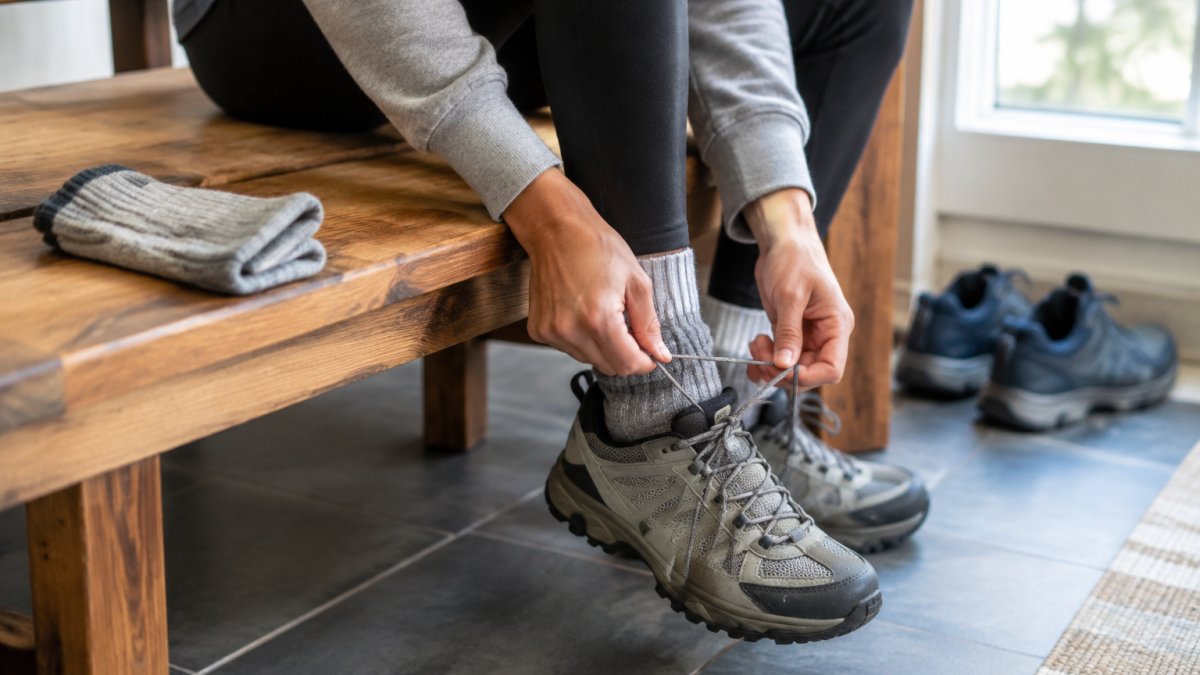
Fit matters as much as thickness. The heel pocket should sit squarely under your heel, not halfway up your ankle. Toe seams should lie flat across the toes to reduce friction and hot spots. If you're between sizes, size up: a slightly loose sock shifts less than a tight one that compresses the foot. A sock that is too small will pull tight across the toes and can cause the cuff to dig in, while a sock that is too large will bunch under the arch and slide down inside the shoe.
Fit troubleshooting:
- Bunching under the arch or at the instep: usually a sign the sock is too long for your foot or the shoe volume is too low. Try a smaller size or a thinner cushioning level.
- Slipping down at the heel: often caused by a stretched cuff or a heel pocket that does not match your foot length. Check that the heel pocket sits under your heel bone, not on the Achilles.
- Tight cuff that leaves a mark: the cuff is too small or the elastane has degraded. A cuff should grip without leaving a deep indentation after an hour of wear.
- Excess toe room: the sock is too long; this creates folds that rub against the toe box. Size down or choose a sock with a more anatomical toe.
- Seam ridge across the toes: a construction issue rather than a sizing issue. Look for flat-locked or hand-linked toe seams.
Sock fit also changes how the shoe fits. A cushioned sock can take up volume in a shoe that was fitted with thin socks, making a comfortable shoe feel tight. If you plan to wear the same shoes for hiking and everyday wear, test them with the sock thickness you intend to use most. A common pattern is to keep one thin everyday pair and one light-cushioned hiking pair for the same shoe, rather than expecting one sock to suit every condition.
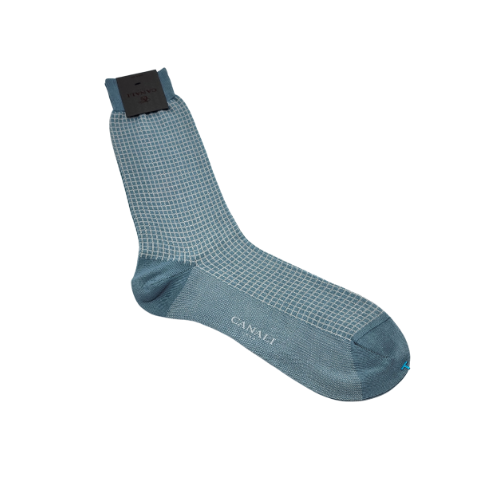
For readers thinking about fit and height together, our Canali Mens Mid Calf Sock shows how a mid-calf cut sits under taller shoes and formal trousers.
Crew, Micro Crew and Ankle: Choosing a Sock Height
Crew height rises to mid-calf and is the most versatile option. It protects against boot rub, works under trousers, and suits most hiking footwear. Micro crew stops just above the ankle, a good match for trail shoes and warm weather. Ankle socks sit below the ankle bone and pair best with low-cut sneakers and everyday wear. The height you choose should clear the top of the shoe: a sock that ends exactly at the shoe collar will rub, while one that ends an inch or two above it stays put.
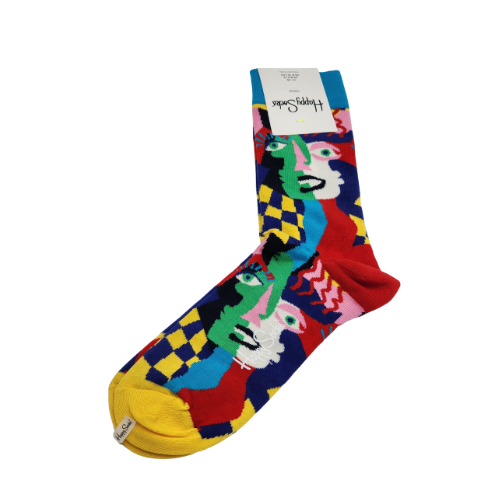
Our Happy Sock Crew Unisex is a straightforward example of crew height done well for daily rotation.
Hiking Socks vs Everyday Socks: Where the Two Actually Diverge
Hiking socks and everyday socks diverge in three places: cushioning placement, moisture handling, and cuff construction.
The overlap is bigger than most people expect. A light-cushioned crew sock in a wool or wool-blend fabric can handle a day hike and a day at a desk. What you want to avoid is buying a thin fashion sock for the trail, or a heavy padded boot sock for the office.
Quick decision guide:
- Mostly office, occasional short walks: cotton or cotton-blend crew socks.
- Regular day hikes, mild weather: light-cushioned wool or wool-blend crew socks.
- Cold-weather hiking: medium-cushion wool socks with a taller cuff.
- Hot weather and trail shoes: micro crew or ankle socks in a quick-drying synthetic blend.
The Best Socks for Everyday Wear That Handle a Trail Day
The best socks for everyday wear are the ones that stay comfortable from a morning commute to an evening walk, and the pairs below earn that label through fabric and construction rather than marketing. We judge each on breathability, reinforced wear zones, and how well the cuff holds without pressure.
Our Sockery 6-Pack Blackground is the practical starting point for most drawers. Six pairs of black-based designs, from solid classics to subtle patterns, built with a soft, breathable fabric blend and reinforced heel and toe for lasting durability.
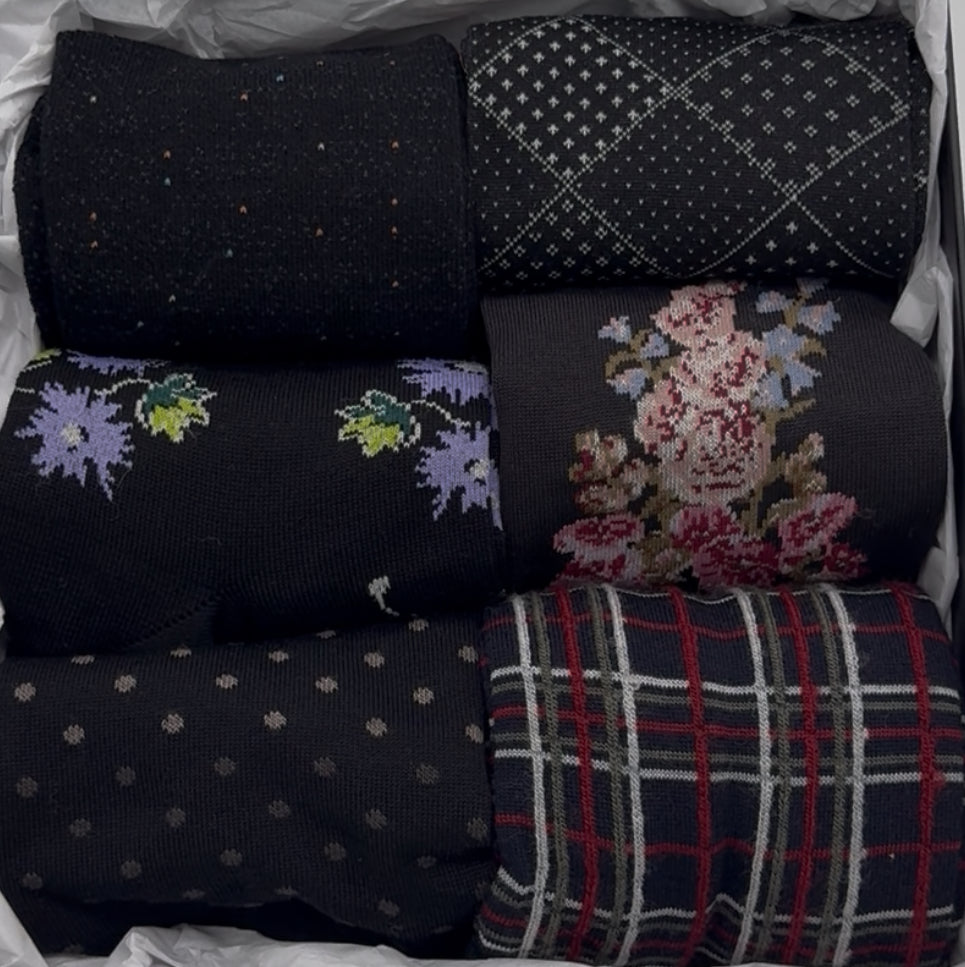
If you prefer pattern over plain, the Sockery 6-Pack Stripes rotates stripe designs across the week, from boardroom to weekend, with the same reinforced heel and toe construction.
The Best Hiking Socks for Hot Weather: What to Look For
Since we don't currently offer dedicated hiking socks, treat this section as your buying checklist rather than a product list. The same criteria apply to any trail sock you compare: fabric first, then cushioning, then height.
How to Test Socks Before You Commit to a Drawer Full
Test a new sock over a short, controlled day before trusting it on a long hike. Wear it for a two-hour walk in the shoes you'll actually use, then check three things: whether the heel stayed in place, whether any seam rubbed, and how damp the sock feels when you take it off.
A simple testing checklist:
- Wear the sock for two hours in your usual shoes, not new ones.
- Check the heel pocket hasn't shifted toward the arch.
- Run a finger along the toe seam for any ridge or lump.
- Note dampness at the sole after removal.
- Wash once and confirm the cuff still holds its shape.
If a sock passes all five, buy a second pair. If it fails the heel or seam check, don't size down hoping for a tighter fit; try a different construction instead.
For guidance on how different fibres behave after washing, the International Wool Textile Organisation's fibre care guidance is a useful reference.
Pick Your Pair From the ShopNsocks Collection
Choosing well comes down to matching fabric, cushioning and height to the shoes you actually wear. Start with one versatile crew pair, test it properly, then build from there.
When you're ready to choose, browse the Sock It Up Blue Ridge crew sock or the Sock It Up Men Crew 1 for a straightforward men's crew option to add to your drawer. For a dress-and-casual rotation, the Bugatchi mercerized cotton three-pack and the Paul Smith striped crew bring pattern and polish to the same drawer.
The hardest part isn't finding socks; it's finding pairs that survive both a Monday meeting and a Saturday trail without falling apart or sliding down. At ShopNsocks, we've built a curated collection of over 200 styles across bamboo, silk, cashmere, cotton and wool, with reinforced heel and toe construction and convenient multi-pair Sockery box sets that take the guesswork out of stocking a drawer. Start with one versatile crew pair, test it the way this guide describes, and build from there.
Frequently Asked Questions
What kind of socks should I wear while hiking?
Look for a sock that manages sweat and reduces friction, because those two factors cause most hot spots. Merino wool and wool blends handle damp conditions well, while synthetic fibers dry faster than cotton. Cushioning should match your footwear: light cushioning under a roomy trail shoe, more under a stiff boot. Height matters too, since a crew or micro crew sock keeps the cuff above the boot collar and stops the edge rubbing your ankle.
Can everyday socks be worn for short hikes?
For a short, dry walk on easy ground, a well-fitting everyday sock can work. The problems start when cotton gets damp, because it holds moisture against the skin and softens, which raises friction. For anything longer, wetter or hillier, a sock built for moisture management is the safer choice.
Should I wear thick or thin socks when hiking?
Match thickness to the space inside your shoe rather than to the season. A thick sock in a tight shoe presses the foot and causes the friction you were trying to avoid. Thin or light cushioning suits close-fitting trail shoes and warm weather. Thicker cushioning suits cold-weather hiking and boots with room to spare. If you change sock thickness, try the combination on before a long walk, since the fit changes.
How should socks fit to help prevent blisters?
The heel should sit in the heel pocket with no slack, the arch should feel supported rather than compressed, and the toe seam should rest flat in front of your toes, not on them. Any bunching under the foot or around the cuff becomes a rubbing point over a few hours. Check sizing against your foot length rather than your shoe size, and try new pairs on with the footwear you plan to wear.
What sock materials are best for walking and everyday comfort?
Merino wool and wool blends balance warmth, breathability and odor resistance, which is why they suit both walking and daily wear. Cotton feels soft and breathes in dry conditions but holds sweat once damp. Synthetic fibers dry quickly and add durability.
